

Conversations Before Words

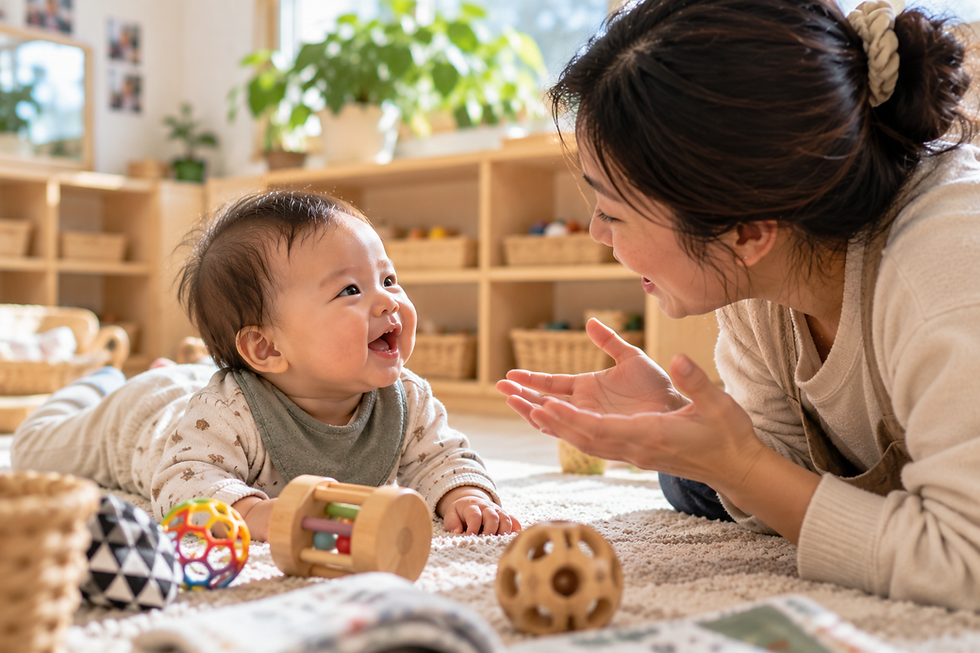
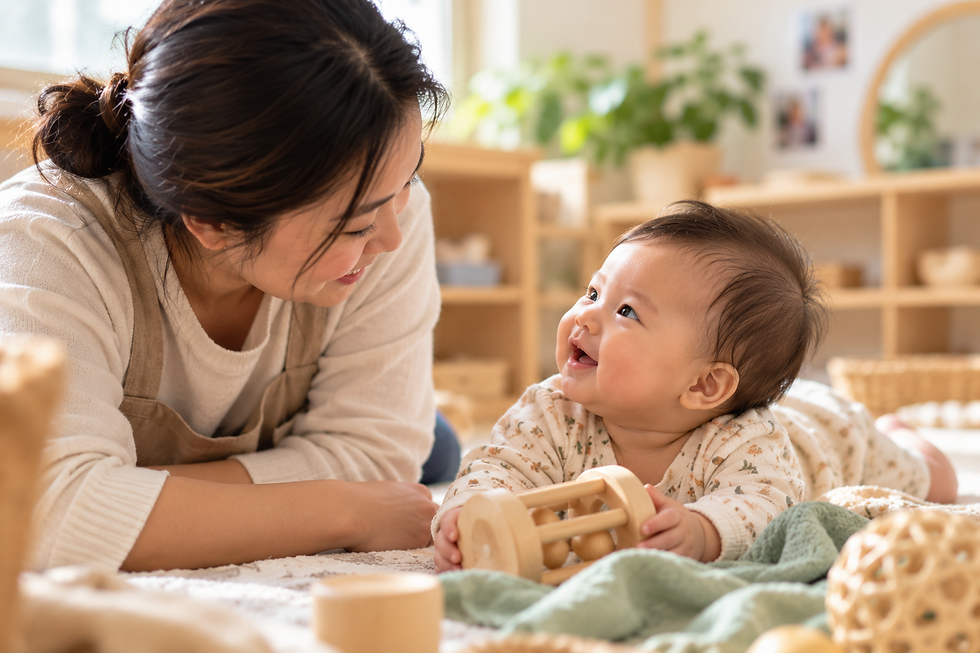
A baby makes a soft coo, and a teacher responds with a smile. The baby pauses, watches, and makes another sound. What seems like a simple exchange is actually the beginning of a conversation.
Long before infants can form words, they are already finding ways to connect with the people around them. Through sounds, facial expressions, gestures, and movements, babies communicate their feelings, interests, and needs.
At Little STEaMers, we recognize these early expressions as meaningful forms of communication. By listening carefully and responding with warmth, our teachers help infants discover the joy of being heard and understood.
Listening to the language of babies
Every baby has their own way of communicating.
Some express excitement through cheerful sounds and animated movements. Others use eye contact, a gentle smile, or an outstretched hand to invite interaction.
Our teachers pay attention to these subtle signals throughout the day. A baby reaching toward a familiar toy may be expressing curiosity, while turning toward a teacher's voice may signal a desire for connection.
By observing these moments, we begin to understand each infant's unique way of expressing themselves.
The beginning of back-and-forth conversations
Conversations with babies do not require words from both participants.
When an infant babbles, a teacher might repeat the sound, respond with a gentle phrase, or pause to see what happens next. The baby may smile, move their arms, or make another sound in response.
These simple exchanges introduce an important part of communication: taking turns.
Through repeated interactions, babies begin to experience the rhythm of conversation—expressing themselves, waiting, listening, and responding.
Our teachers make space for these exchanges rather than rushing to fill every quiet moment.
Gestures are meaningful, too
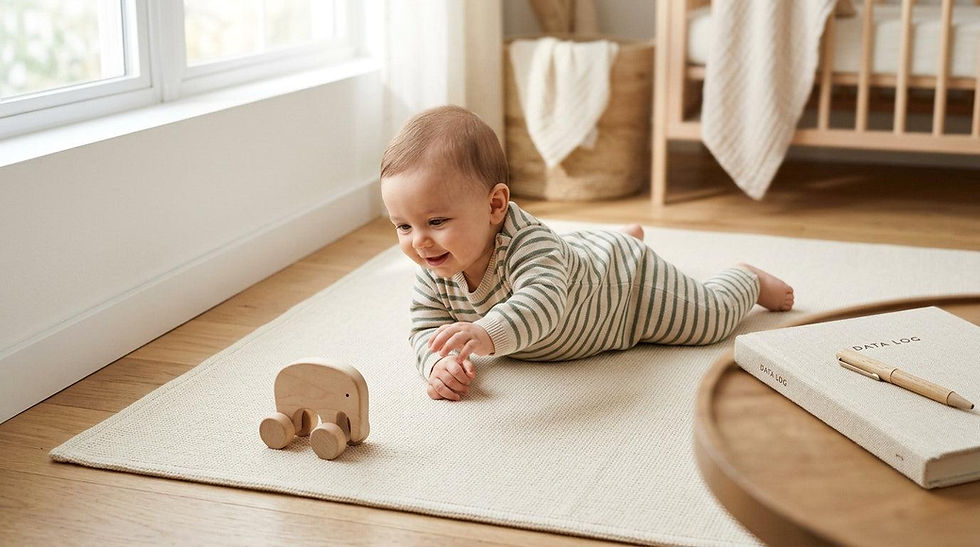
Communication happens through the whole body. A baby may lift their arms to be picked up, point toward something interesting, or reach for a favorite object. Even a change in facial expression can communicate a feeling or preference.
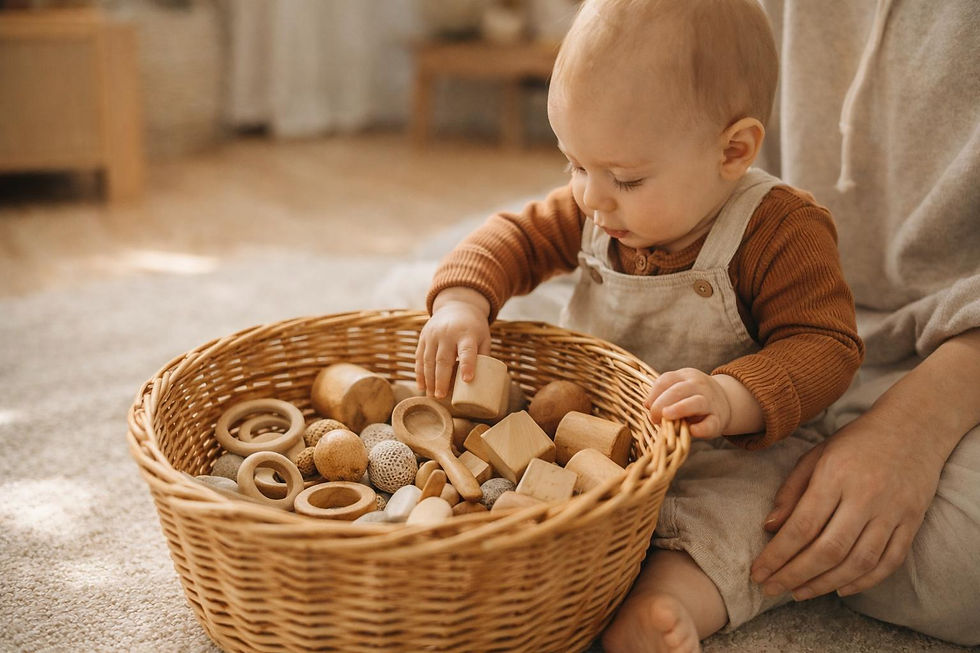
Inspired by the Reggio Emilia approach, we value the many ways children express their thoughts and experiences. Our teachers respond to these gestures with words, actions, and attentive care. When a baby reaches toward a ball, for example, a teacher might say, "You see the ball! Would you like to explore it?"
By connecting language with the baby's interests and actions, we create natural opportunities for communication and understanding.
Language grows through everyday experiences
Early language development is woven into daily routines. During feeding, teachers may describe the food or respond to a baby's sounds. While getting ready for outdoor time, they might name familiar objects or sing a favorite song.
Looking at picture books, listening to music, and sharing playful expressions also provide opportunities for babies to hear language in meaningful contexts. These experiences do not need to be formal lessons. What matters most is the responsive interaction between the baby and a caring adult.
Every voice deserves to be heard
Each infant develops communication skills at their own pace. Some babies vocalize frequently, while others communicate more through gestures, expressions, or quiet observation.
Our role is to recognize and respect these differences while creating opportunities for every child to participate. We also value the languages and expressions babies experience at home. Familiar words, songs, and sounds can help strengthen the connection between family life and the classroom.
At Little STEaMers, we believe communication begins with relationships. Every smile exchanged, sound answered, and gesture understood helps build a foundation for language, trust, and connection.
Long before the first word is spoken, there is already so much being said.
Comments